


It's been pretty great being able to be in the studio all day, everyday...even if there is no AC.
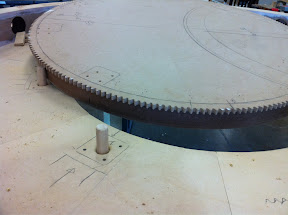
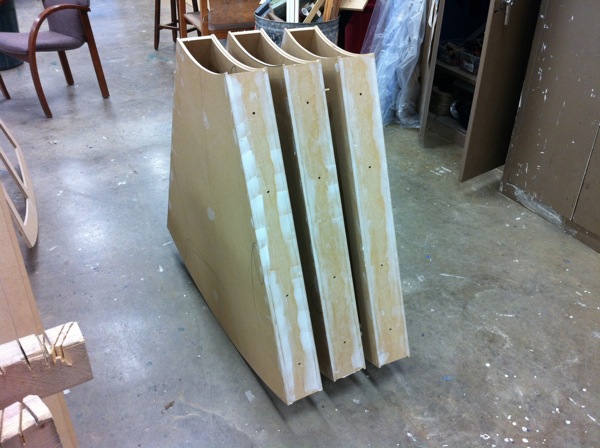
The posts allow for the big center gear to be attached once the other 8 sections are bolted together.
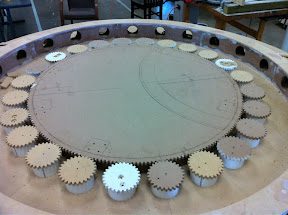
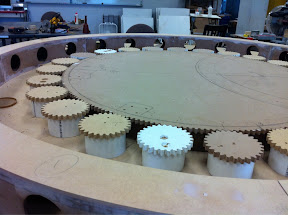
The posts allow for the big center gear to be attached once the other 8 sections are bolted together.
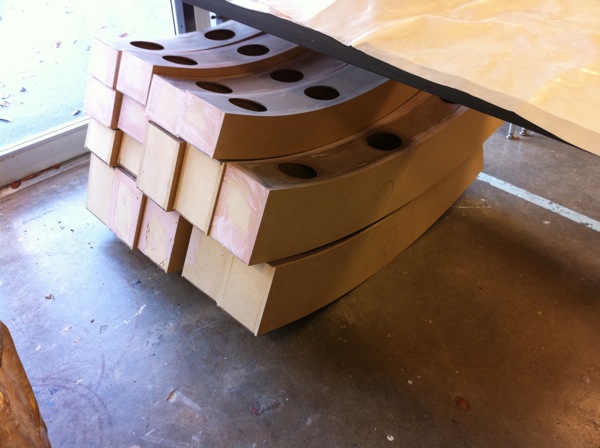
Spent most of the day figuring out how to mount the main gear for the vault so that it could be removed.
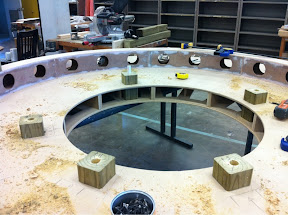
Figured it out with some 4x4's and 1" dowel rods.
Figured it out with some 4x4's and 1" dowel rods.
Labels: bank, CreateHere, MakeWork, sculpture, Vault
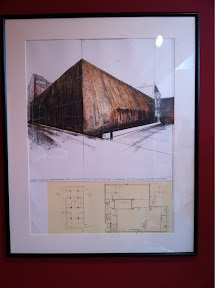
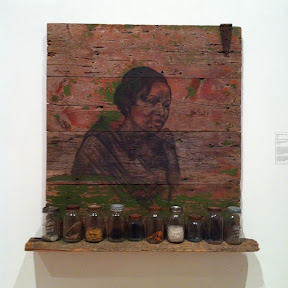
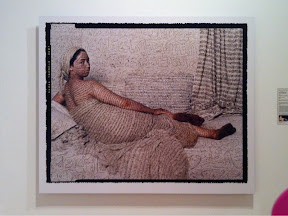
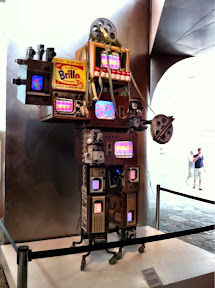
Excellent trip to the Hunter Museum in Chattanooga today. They have made some great choices for their recent acquisitions.
It took too long figuring out how I was going to cut the gears for the bank vault. I tried projecting them and using lots of math but finally found a gear generator app online. It allowed me to print the gears, spray mount them to the wood and then cut them out. It was still a lot of work, but it's done.
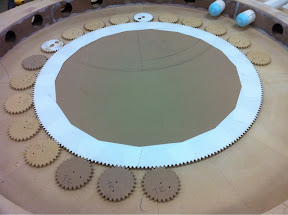
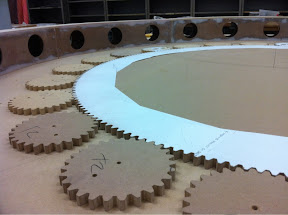
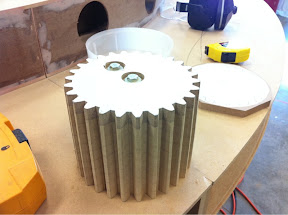
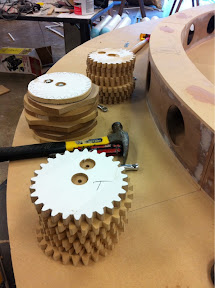
Classes ended a week ago and I've been in the studio every day since. Right now I'm working on getting the vault bolted all together and the pistons aligned. I'm also painting all the for sale and foreclosure signs; these should be done very soon.


After months of reworking a series of diptychs, I've decided it would be best to spend my time on something else. I repainted the series dozens of times and just never felt like they were right. On my way home from the studio last week I was struck by just how many homes are for sale or are in foreclosure. In just a 30 minute drive I saw well over 30 signs. I went back and photographed them and started making mdf cutouts of their various shapes. So far I have 31.


I've been out of town for the week visiting the sights, sounds and sometimes the smells of New York City. After the Met, MOMA, New Museum, Pulse Art Fair and several others I also managed to create and order fabric to create six ties. The pattern for each of the ties is based off and and designed around the logos of the top 6 bailed out banks. I am thinking of displaying these in white shadow boxes with a tie in the center and American flag pin to the right side, signifying a lapel. The often hidden relationships formed between political figures and major corporations served as inspiration for this work.


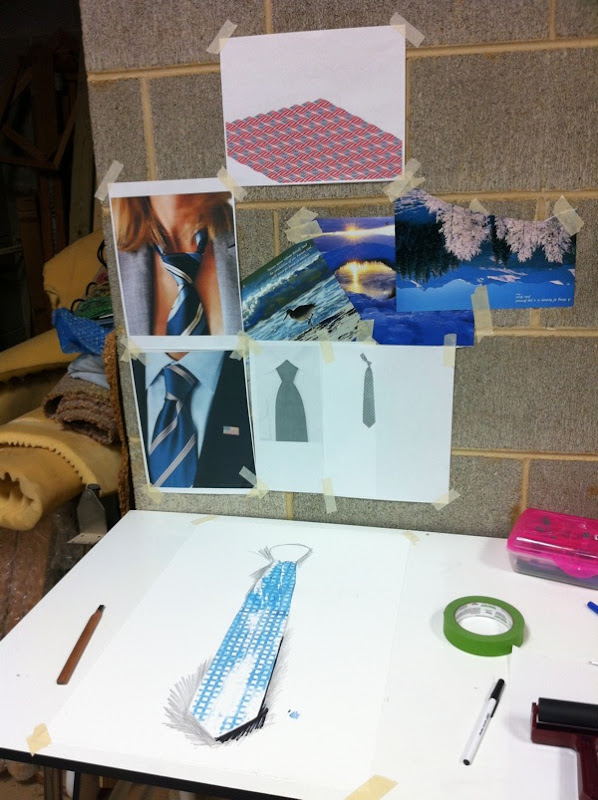
Today I started working on a series of ties for bailed out banks. I've been intrigued by images of corporations, specifically CEO's. An image I found recently showed the top three bailed out bank executives walking alongside each other. Each of their ties were remarkably similar, having a strong diagonal pattern. I also started to notice images of ties with tiny American flag pins on the breast pocket. Pulling up logos from various corporate entities, I found a recurring pattern; the color and overall design of their logos are uniquely patriotic. The Bank of America logo is very close in design to the US flag while other designs such as the JP Morgan Chase logo have a distinctive "trust us" appeal.
I also came across this website which discusses "The Power and Meaning Behind Bank Logos"
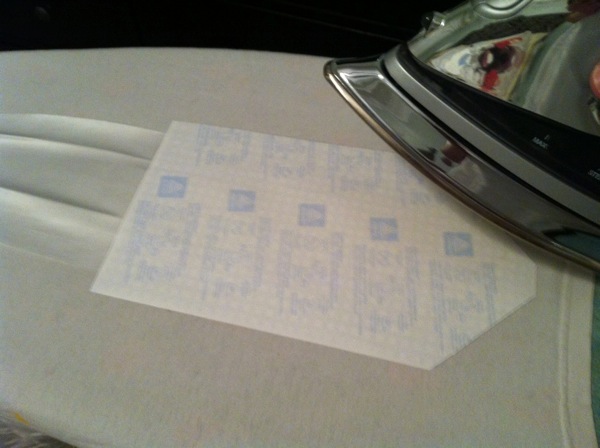
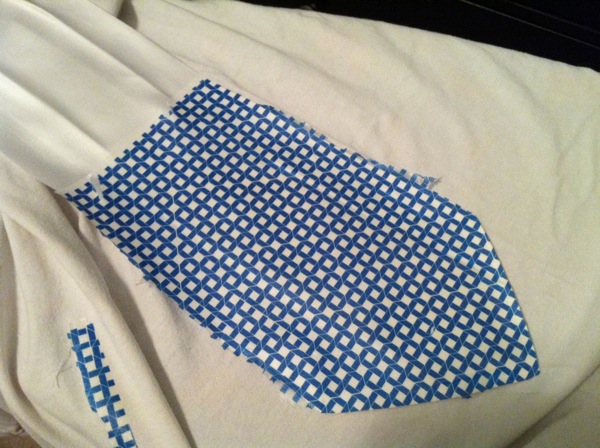
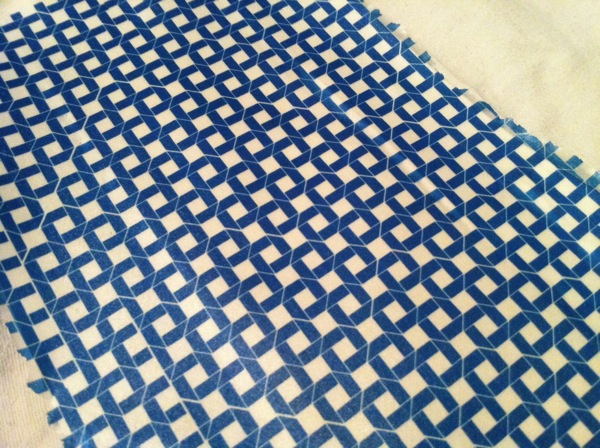
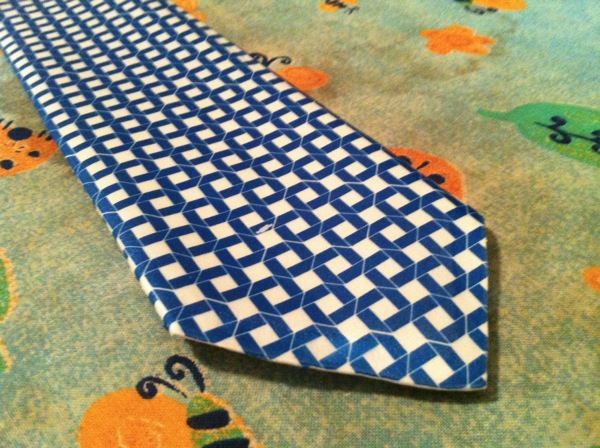
I used the JP Morgan Chase logo to create a repetitive pattern that I then transferred to a blank, white tie. The results were pretty good, but I am now looking to having them printed by the yard.
I also came across this website which discusses "The Power and Meaning Behind Bank Logos"
I used the JP Morgan Chase logo to create a repetitive pattern that I then transferred to a blank, white tie. The results were pretty good, but I am now looking to having them printed by the yard.
Labels: CreateHere, F.A.M.P., MakeWork, mark mcleod, sculpture, Vault
Drawings, Ties, and Vaults
0 Comments Published by Mark Mcleod on Monday, February 14, 2011 at 5:54 PM.

Over the past couple of months I have continued to work on the bank vault along with some other projects. The vault is coming along nicely and is in the Bondo (patching) phase. All the cracks and holes need to be patched before final assembly and paint. Because Bondo must be used outside, the cold weather has slowed down the process. All the pieces have gone through at least one patch and sand and most are on their second coat. I hope to get everything assembled for final patch in the next 2 weeks. It's a slow process to make sure all the pieces fit just right.
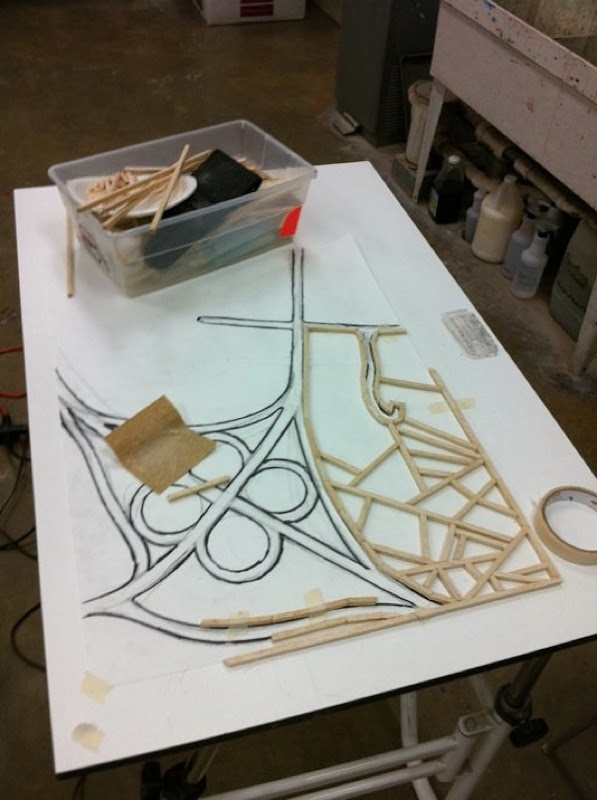
To get through the cold weather I have started a series of drawings made from wood. Originally I intended to make silk screen prints, but after playing around with scrap balsa wood, I like the results. I am building 18" by 24" wooden outlines of major vault and bank intersections. The one in the image maps the location of Ft. Knox (the gold vault, not the military base).
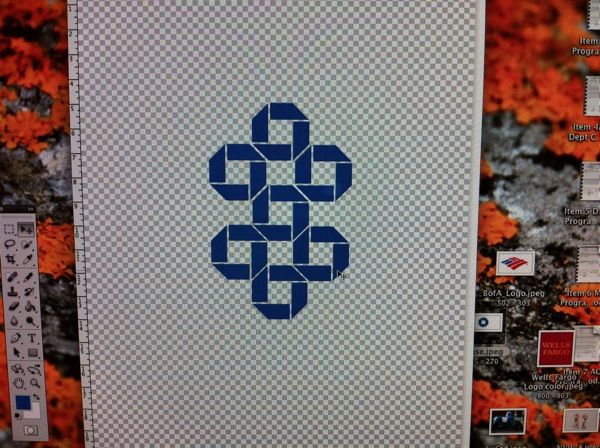
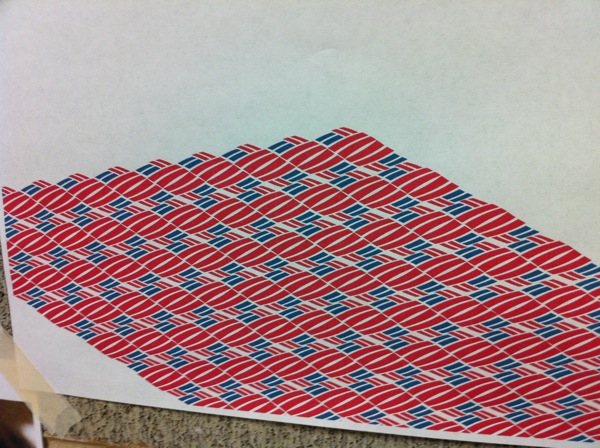
In addition to these I am also working on several tie paintings. Neckties. I've been doing research on the logos for the top banks involved with government bailouts (http://money.cnn.com/news/specials/storysupplement/bankbailout/). Most of the logos used by these entities are red, white and blue and embody patriotism. I started noticing that most of the logos could be duplicated into patterns. After playing around with the JP Morgan Chase and Company and Bank of America logos, the repeated logos resembled fabric. Doing some more research on neckties I rediscovered that political figures often where an American flag pin on their left breast pocket to signify their patriotism and their ties to the country. I am working on incorporating these corporate bank ties with the American flag pins but not sure of the approach I want to use. The images below were made from ink jet transfers.
Labels: CreateHere, F.A.M.P., MakeWork, mark mcleod, sculpture, Vault
